Thursday, May 5, 2011

The Black Doctor Develops Sustainable Retail Displays

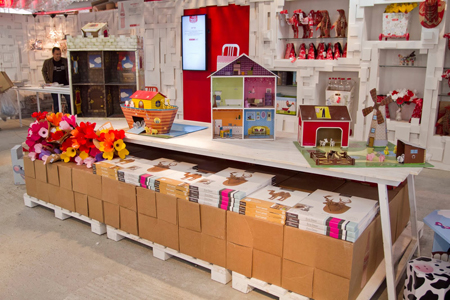
The Pop Up described in the post below is part of Coca-Cola’s Give it Back campaign which extends beyond just recycling used bottles and cans, to developing 100% recyclable merchandise display racks for use in grocery and convenience stores across the US.
clip_image006
The freestanding units are made of easily recyclable corrugated cardboard and designed to communicate sustainability to shoppers. In an industry first, the company is making inroads into developing a closed-loop retail equipment program whereby they create recyclable in-store merchandise racks and then recover, reuse and/or recycle the racks.

"Coca-Cola recovered 400 million pounds of cans and bottles in the U.S. in 2010, yet we want to do more," said Gary Wygant, Vice President, Business Development, Coca-Cola Recycling. "By creating a 100 percent recyclable merchandise display rack, Coca-Cola is asking grocery and convenience stores to join our sustainability efforts by returning or recycling our racks, just like we ask consumers to return or recycle our product packaging."

Pending current tests being successful, the new racks should be available in late 2011. They’re the first in a series of new merchandise racks being developed by Coca-Cola. There’s also a design for a rack made entirely from recycled PET plastic in the pipeline.

"Sustainability is core to our business, so we want to demonstrate this commitment to our customers and consumers at every level," said Bruce Karas, Director, Sustainability and Environment, Coca-Cola Refreshments. "These new racks are a great example of how we can find innovative ways to make our equipment both sustainable and part of the shopping experience. With the GIVE IT BACK rack, we're helping people feel good about their purchasing decisions as we work toward our overall sustainability goals."

Coca-Cola demonstrates a clear commitment to sustainability that goes much further in addressing issues of waste than the feel good nature of their Pop-Up in Israel conveys. If we’re to have a long and happy future on this planet, then we have much work to do in diverting our reliance on the rapidly depleting store of natural resources we draw from, towards recycling what we already have.

clip_image004  clip_image002

Wednesday, May 4, 2011

Pop Ups Creating a Buzz

If I had a dollar for every Pop Up I saw or read about these days I’d be writing this post from the comfort of my yacht anchored in the Mediterranean. So many now though are constructed to offload last season’s sale items, to fill the space before a retailer moves into a new location or because marketers convince brands they need to jump on the wagon regardless of it fitting strategy. These Pop Ups lack the innovation, cleverness and appeal that we saw from many early incarnations (think Prada’s Central Market in 2007, Nike Runner’s Lounge established in Canada in 2005 or Joost’s Greenhouse – which has toured Melbourne, Perth and Sydney in different forms). This Easter saw two truly great spaces pop up – Coca-Cola’s Give It Back in Israel and Aesop in Selfridges London.

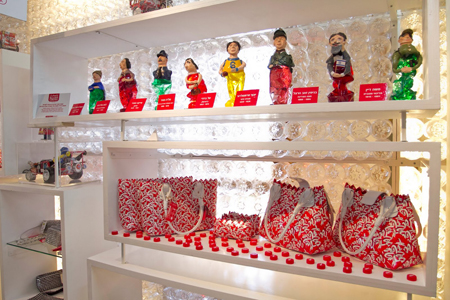
The soft drink space opened in Tel Aviv during the Passover holiday, which apparently also happens to mark regeneration and cleanliness in Israeli society – very appropriate. The Coca-Cola Recycled Collection is an offering of products made from recycled Coca-Cola cans and bottles including shirts, jewellery, hats, handbags and furniture. Customers can purchase any of these items in exchange for empty bottles / cans and a little cash.

clip_image001 clip_image002
 

The key driver of the event was to educate the community about the benefit of recycling through the idea of ‘recycled fashion’. Audio visual installations explained the methods for manufacturing bottles, the process of recycling and opportunities for the recycled products. 


You’ve probably guessed by now that I’m a huge fan of Aesop and their latest Pop Up at Selfridges London, provides another excuse for me to pump their tyres.

clip_image004

Designed by Royal College of Art graduate, Hiroko Shiratori and Aesop’s brand director, Dennis Paphitis, the space has been constructed from thick rope, natural wood and coir matting and has been described as “texturally warm” (I’m interpreting that as being a contrast to the stark black / white acrylic clad fitouts with bright fluoro lighting that many cosmetic brands operate out of!).

It houses Aesop’s skin, hair and body collection and also provides the opportunity for customers to receive personalised consultations from an Aesop expert.

Leveraging the marketability of having product ranges based on plant derivatives isn’t enough for Aesop. Their philosophy of a healthy and natural existence travels further than skin deep and they have consistently worked with cutting edge designers to create places that have a strong emphasis on natural materials, such as stone, wood, glass and fibres. Every Aesop space is different yet still conveys the brand message, without dependence on a cookie-cutter approach to store design.

The Selfridges display will run until 31 May.

Wednesday, April 27, 2011

PSFK: The Future of Retail

Here is a fantastic presentation delivered by PSFK on the Future of Retail that was sent to me last week.

PSFK is “the go-to source for new ideas and inspiration for creative professionals.” As a trends and innovation company based in New York “they publish a daily news site, provide research and business consultancy, manage a network of experts and host idea-generating events.” They “aim to inspire readers, clients and guests to make things better – whether that’s better products, better services, better lives or a better world.”

They explore the future of retail from the perspective of brands, shoppers, retailers and communities. Key learnings from their research include:


1. Increased access to the mobile web is freeing the retail experience from the confines of the physical and traditional online environment, allowing shopping to take place virtually anywhere.

Example – Stripey Lines is a mobile application that uses barcode scanning recognition to allow users to quickly access information, check pricing and availability and make purchases.
image 
Activated Space> Unfortunately we’re still waiting for this technology to be made available in Australia…. window of opportunity people! If anyone has information to the contrary, please let me know immediately.


2. Creating a flexible in-store environment through design, product offerings and promotions, ensures that each visit will feel like a brand new experience.

Example - Nike’s pop up retail space in London, 1948 features modular units on wheels that can be used as bleacher seats during events or as merchandising space.
image
Activated Space> the world is changing at an exponential pace and your business will continue to change as a result. Design your space so you can continue to change with minimal disruption and reallocation of resources that can distract from your focus on the customer.


3. Leveraging collaborations based on aspects such as locale or cultural touchstones, maintains a brand’s relevancy in the eyes of the customer.

Example – Melbourne’s Lost & Found Hotel is a unique place to stay designed especially for readers of the Lost & Found online publication. They’ve collaborated with various local businesses they love, to bring their publication to life and to “help tell a story about Melbourne as a city of creative people producing interesting things.”
LF_011
Activated Space> Work with your neighbours (physical, online, wherever there’s a synergy). Do you even know who they are?


4. Whether physically or through connected technologies, shopping is still best experienced socially.

Example – Juicystar07 is one of many video bloggers sharing her opinions and tips on recent clothing, cosmetic and accessories purchases. I posted some time ago (Bloggers Drive Brand Awareness) about a competition she did with Shoes of Prey to promote awareness of their brand and drive traffic to their site. Note the Juicy Couture branded wallpaper on her youtube channel also.
image
Activated Space> Quote from PSFK: “Allow customers to take photos in store”. There are certain retailers with backdated policies that should heed this advice very strongly. To them I pose the following;
(A) Do I look like I’m casing the joint? And
(B) Most people pay with card, if I wanted some cash I’d hit up a convenience store for petty change or bank for the big bucks. Think about it! If you’re store is interesting enough for me to photograph, chances are I will share it with friends which will drive more foot traffic and more sales.


5. In a connected world where access to information is fluid and transparency is the expectation, brands must actively take part in the conversation, otherwise their customers will do so without them.

Example – OfferMeATrip is a site that allows customers to list their ideal holiday and have travel agents bid on providing the dream itinerary, instead of customers having to fit in with the typically generic packages offered by agents.
image
Activated Space> This two way dialogue means that finally economic theory can hold true (ah yes I am a bitter failed student of the subject) – supply will equal demand. No longer will brands have an excuse for producing frivolous products we don’t want, that draw from the earth’s limited resources. This is such an important step in preserving out planet.


6. The introduction of connected technologies into retail environments is changing the ways that stores are able to provide customer service. 

Example – Colette now supplement their mannequin displays with iPads showcasing additional looks (read about this in Will Ipads Replace Mannequins?).
[image[6].png]


7. Introducing likeminded products and services into standalone retail environments shows customers that a brand is confident in their core offering and looking to further enhance the in-store experience.

Example – Captain’s of Industry is a one stop shop for men. They are gentleman’s outfitters offering bespoke footwear and leather accessories, haircuts, grooming products, made to measure menswear and a cafe.


8. Physical stores still provide the best means to communicate with customers and offer a brand experience… 
 
Example – This is Station 999, a lifestyle, clothing and gift shop with an unique house like structure that doubles as display units (as published in Frame).

Activated Space> So make my jaw drop when I walk inside people!


9. In the new customer-centric approach to retail, stores need to continually find ways to lower barriers to purchase and be prepared to make a sale whenever and wherever a customer is ready.

Example – Grill’d Burgers take their van to the countryside for a music festival to feed hungry punters.
IMG_0386 IMG_0387 IMG_0388

10. Empower customers
by providing them with all of the tools needed to make an informed purchase decision.

Example – Google Places allows shoppers to view the inside of a location’s setting, facilities, ambiance, merchandise layout and decor so they know what to expect and how to navigate their way around when they walk in the door.
image
Activated Space> All shopping malls should be using this. There’s nothing worse than having to go to a large centre you’ve never visited to pick up one item when you’re in a rush. Not knowing what carpark is closest to the store and how to find your way around inside could all be a stress of the past.

I recommend checking out the full presentation here.

Wednesday, April 20, 2011

Our Future: Augmented Reality

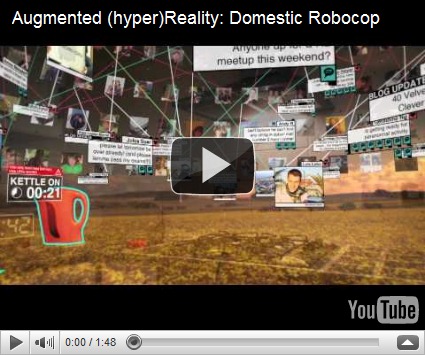
Cleaning out my emails just now and found this amazing film projection on how we could be living in the future with augmented reality.

The film was created by Keiichi Matsuda for his final year Masters in Architecture and was part of a larger project about the social and architectural consequences of new media and augmented reality.  The premise is that “the latter half of the 20th century saw the built environment merged with media space, and architecture taking on new roles related to branding, image and consumerism. Augmented reality may recontextualise the functions of consumerism and architecture, and change in the way in which we operate within it.”


There’s so much to read about the integration of mobile technology and wireless at the moment, and the reality is that the scenario presented above is frighteningly realistic.  This technolution presents a myriad of opportunities for brands to infiltrate our lives in new and exciting ways. Only a couple of weeks ago, New Retail posted about such a development that could change the way we use store changing rooms – read here.

PS Has anyone else got motion sickness from watching this?

Wednesday, April 13, 2011

Big Trouble for Big Richard

A good friend sent me details of a company that have adopted a rather novel approach to marketing themselves. Not only do Big Richard condoms have the ultimate symbol of fertility (the rabbit) as part of their logo, but they’re also making use of every bad pun in the book like “Girls like it better with a Big Richard”. My favourite brand activation though is the Condom Courier van they’re running around town in. Unfortunately they don’t do house calls but you may see them at festivals and the like.

big richard 3big richard 1     big richard header 2

They’ve also got a rather raunchy line of underwear available too….

big richard header 1

They did have a facebook site but I’ve just read that it has been closed down. Thumbs down Zuckerberg! They also tried to engage the Grand Prix to carry out some promotional activity but were refused. After reading their blog it quickly becomes apparent that the life-saving protection they’re selling is expected to be communicated in a very sanitized fashion. When you consider that a very famous campaign involving a girl on a bed and an ant-eater named Rex used blatantly sexual overtones to sell cotton briefs it seems grossly unfair that a product that’s directly related to sex should be restricted from referencing doing similar. What do you think?

There’s a chance you may see the following clip screening at a cinema near you soon… that’s if the Classification Board doesn’t get involved!


PS If you haven’t seen the Holeproof Antz Pantz ad here it is…. so brilliant it sits in the Australian Centre for Moving Image archives.

Friday, April 8, 2011

Opportunities Everywhere We Look

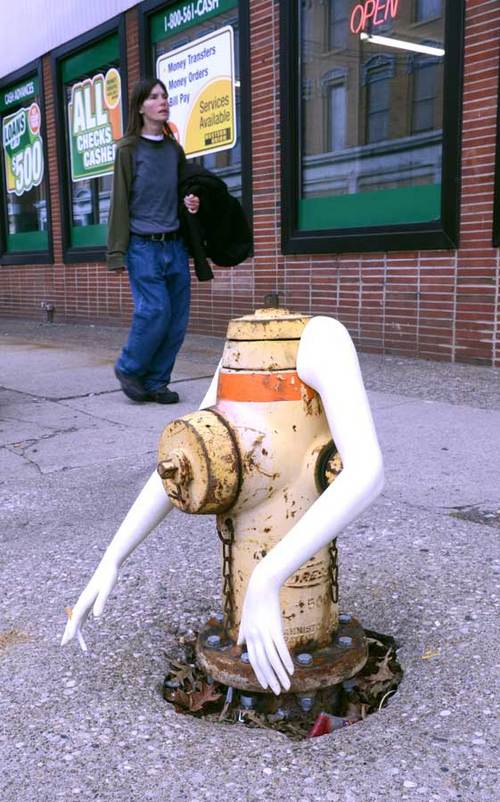
Just a reminder that every space, in every place offers opportunity…

meter-maid-bike-sm.jpg fireplug-hooking-sm.jpg

Seen in Covington, Kentucky. Thanks Wooster

Tuesday, April 5, 2011

What’s in the Bag?

How exciting is it walking into an event and seeing the goody bags lined up, just waiting to be pressed into your hands! That’s what I was feeling when I entered the BMW Edge at Fed Square a fortnight ago for a LMFF seminar.  A closer inspection inside my glossy white bag revealed the usual bottle of water, a choccy, some L’Oreal samples and a pile of printed materials.

IMG_0702

As I sifted through the literature I was immediately impressed by the effort that festival product partner, Kikki K had gone to in providing for the bag. There was a journal and pen – perfect for me to take notes with as I listened to the speakers. There was also an A3 magazine printed on a heavy weight paper that celebrated the ten year anniversary of the brand established by Kristina Karlsson as well as photography, food and music from her native Sweden. The photography is beautiful, the quotes inspirational; “Be in control. Be free… Being organised is about having more time for enjoying things in life.. and the freedom that brings.” The publication subtly incorporates product into the images including the iconic white storage box that started it all. Each item is positioned as being able to improve lifestyle rather than just providing function. The best example of this is the Dreams Journal -

“Something very powerful happens when you start putting your dreams on paper. They become real and achievable. Use this list from our 101 Dreams Journal as your starting point. Consider what you’d love to achieve; what you’d love to experience; and what you’d love to see. Write down what comes to mind. Don’t edit yourself. Dream, then do.”

IMG_0680IMG_0681IMG_0682IMG_0685IMG_0686IMG_0687

My favourite piece though was the Fashion Planner. Kikki K had a product customised perfectly to the recipient of the bag – fashionistas. The blurb inside the cover explained it as an opportunity to save time by planning outfits in advance, to carry out a wardrobe audit, to collate your wishlist of garments to buy and to capture trends.

IMG_0690IMG_0691IMG_0692

Each of these pieces had been tailored to the audience, unlike the other sponsor pamphlets, unworthy of mention that I threw straight into the recycling. Sponsorship of events and festivals is typically a costly exercise so make it worth your while and think about what you can provide that will leave a positive and lasting impression on the receiver.